
Sleep Calculator
Need to grow in 2026
Sleep Calculator
Use this calculator to compute what time to wake up or go to bed to get a specific amount of sleep. Use the Hours Calculator if you would like to find out the number of hours between two times. When counting, please deduct the time taking to fall asleep, which can be very different for different people.
:
:
Sleep Length Calculator
Use this calculator to compute what time to wake up or go to bed to get a specific amount of sleep. Use the Hours Calculator if you would like to find out the number of hours between two times. When counting, please deduct the time taking to fall asleep, which can be very different for different people.
:
:
I want to sleep for
hours
minutes
Sleep cycles
A pattern unfolds through the night - shifting back and forth without pause between two kinds of rest, one quiet, one lively. Each type plays a role, though different in nature. One lacks quick shifts behind closed lids; the other shows them clearly. Both appear again and again, hour after hour. What time you fall asleep mostly ties to hormones guided by your internal daily clock. This inner rhythm lines up with daylight and darkness outside, keeping steady even when those cues vanish. Picture flying across continents - your body still follows home time while the world around runs on another schedule. That mismatch shows in tiredness at odd hours, alertness when you want rest. Your sense of day and night gets twisted, throwing off when sleep comes naturally. Sleep usually lines up with the body’s internal rhythm. Yet outside things often shift it - like brightness around you, what time people expect you to move through your day, short rests during afternoon hours, even family patterns passed down. Some pieces come from within. Others show up because of how life is arranged.
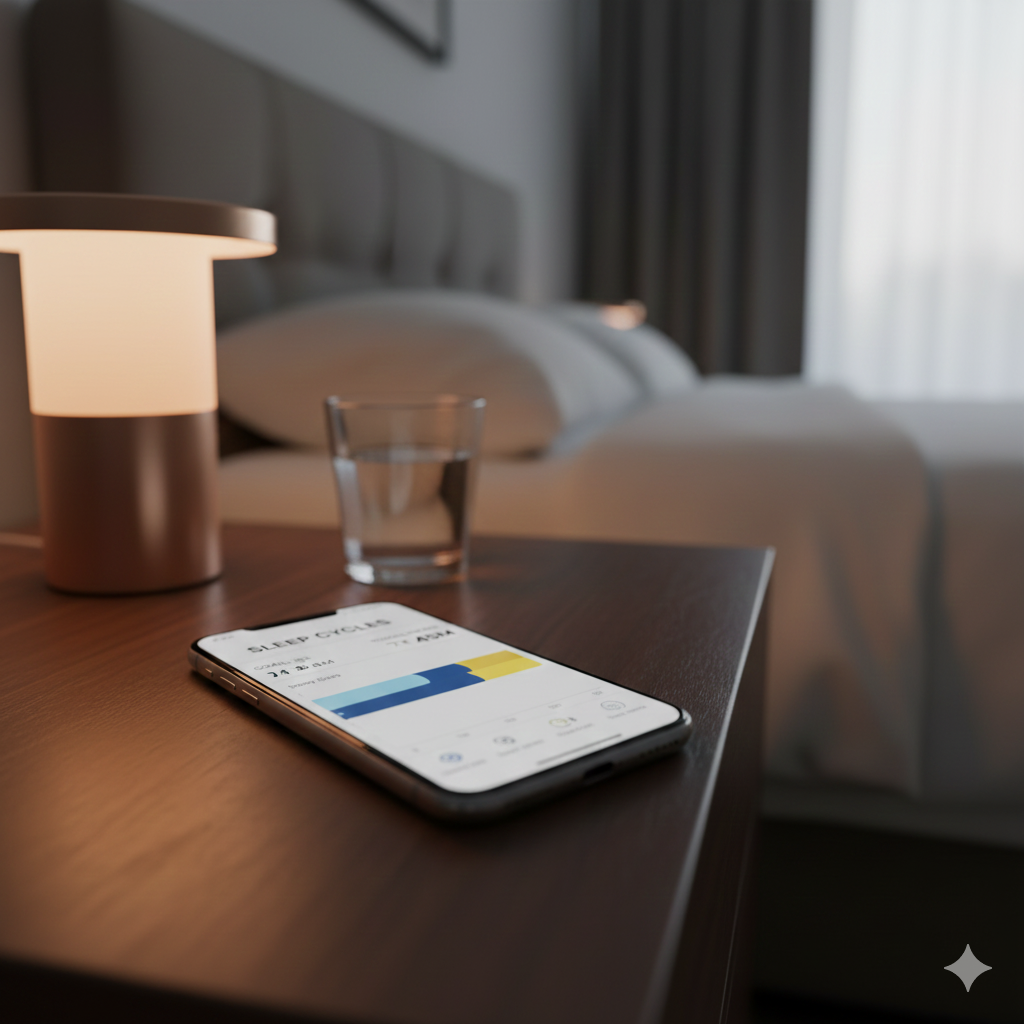

REM and non-REM sleep
When sleeping, the mind uses much less power compared to being alert - especially in non-REM phases. Eyes dart around during REM rest, muscles shut down almost completely, dreaming shows up. That stage carries traits distinct from quieter, deeper non-REM cycles. One kind hums with activity while the other moves slow and still. These two forms of slumber feel worlds apart. Every so often, the body shifts between non-REM and REM sleep roughly every hour and a half, cycling four to six times when rest goes well. Starting off with non-REM, it drifts later into slow-wave stages - deep rest kicks in here. As that happens, heat levels dip, heartbeat slows down too. The mind burns much less fuel during this phase, busy refilling its stockpile of ATP, the compound storing and delivering energy within cells. In these quiet hours, growth hormone flows out, playing a key role in how people grow. Most of the night people spend less time in REM sleep. Dreams tend to happen during these moments, sometimes scary ones. Missing out on this phase might lead to restlessness, trouble focusing, odd thoughts, even seeing things that are not there. After being blocked from reaching REM, the following nights often show more tries to enter it, along with longer stretches inside it than before. That response has been named REM rebound, hinting at how vital this stage could be. Scientists continue exploring what exactly happens here, why it matters so much. While experts generally agree it plays a key role, there are rare times when skipping parts of it briefly seems to bring short-lived benefits.
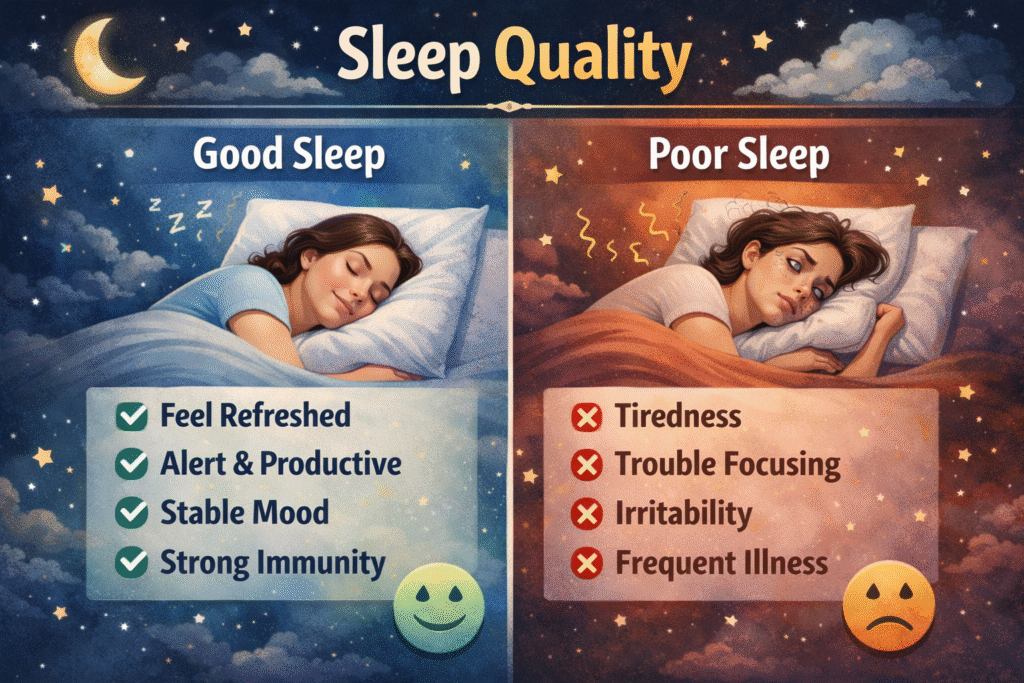
Sleep quality
Waking up feeling refreshed gives clues about rest quality. How often someone stirs during the night plays a role too. Staying down once lights go off matters just as much. Getting shut-eye without tossing around sets another marker. Personal sense of energy in the morning weighs heavily into the picture. When sleep feels broken, it throws off how smoothly you move through each phase. For rest to feel right, your body's urge to sleep should line up with its natural daily rhythm. Best results happen when peak melatonin levels and the lowest point in body heat fall sometime after halfway through sleep but still finish ahead of waking.
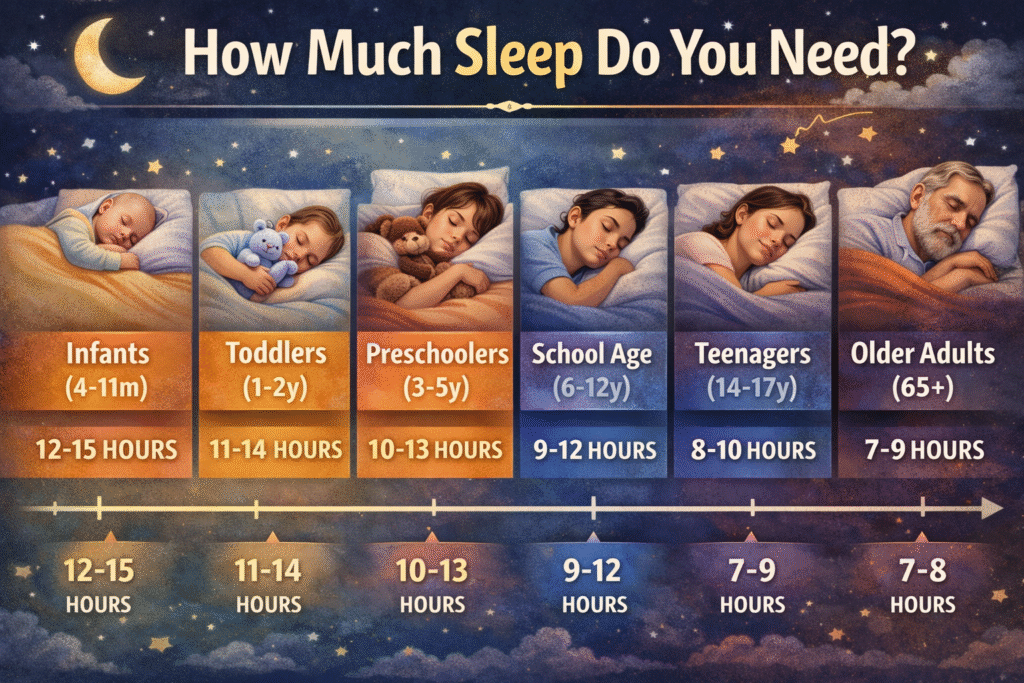
How Much Sleep Do You Need?
Scientists still don’t fully grasp how sleep works. Depending on things like age, some people need more rest than others - there’s no one-size-fits-all number. What matters most shows up during waking hours. If someone functions fine without feeling drowsy, their sleep likely meets their body's needs. Most studies suggest six to seven hours of nightly rest links to better health markers, yet outside influences often play a role too. When someone gets older, their need for sleep shrinks. Newborns rest much more than grown-ups do. Over time, that gap begins to close. By about five years old, kids start needing roughly the same amount of shut-eye as adults. Sleep patterns settle into a rhythm closer to maturity. Babies need lots of rest. Little kids still require quite a bit each night. School-aged children do best with consistent bedtime routines. Teens often struggle to get enough due to busy schedules. Adults function well when they stick to a steady pattern. Older adults might find their sleep habits shifting over time
| Age Group | Recommended Hours of Sleep Per Day |
|---|---|
| 0–3 months | 14–17 hours |
| 4–12 months | 12–16 hours per 24 hours (including naps) |
| 1–2 years | 11–14 hours per 24 hours (including naps) |
| 3–5 years | 10–13 hours per 24 hours (including naps) |
| 6–12 years | 9–12 hours per 24 hours |
| 13–18 years | 8–10 hours per 24 hours |
| 18–60 years | 7 or more hours per night |
| 61–64 years | 7–9 hours |
| 65 years and older | 7–8 hours |
Frequently
Asked Questions
A sleep calculator is an online tool that helps you find the best time to sleep or wake up based on natural sleep cycles. It helps you wake up feeling refreshed instead of tired.
The sleep calculator works by calculating sleep cycles, which usually last about 90 minutes. It suggests ideal sleep and wake-up times so you avoid waking up during deep sleep.
Good sleep improves focus, memory, mood, and overall health. Poor sleep can cause tiredness, stress, weak immunity, and reduced productivity.
Sleep calculators provide estimates based on average sleep cycles. Actual sleep quality may vary depending on lifestyle, stress, health, and environment.
A sleep cycle includes light sleep, deep sleep, and REM sleep. One complete cycle lasts about 90 minutes, and most people experience 4–6 cycles per night.
Shivam AI Tools provides simple, fast, and reliable online calculators to help users plan better and make informed decisions. Our tools are designed for ease of use and educational purposes only
Our Services Tools
Our Services Tools
Contact Us
Best Development Company Shivam Software Raipur Chhattisgarh
+91 9669251442
shivampandey22798@gmail.com